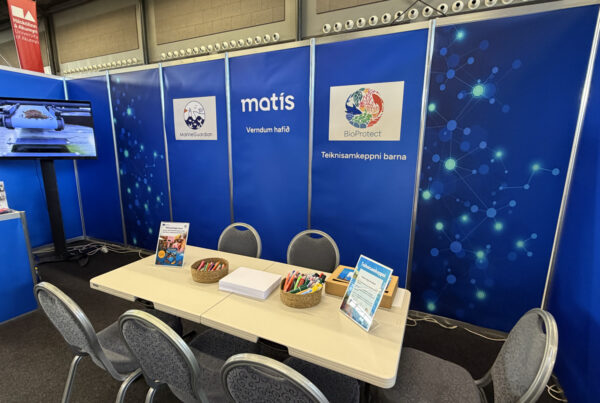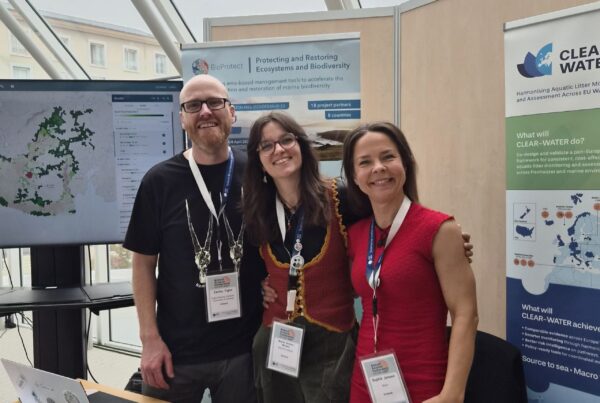

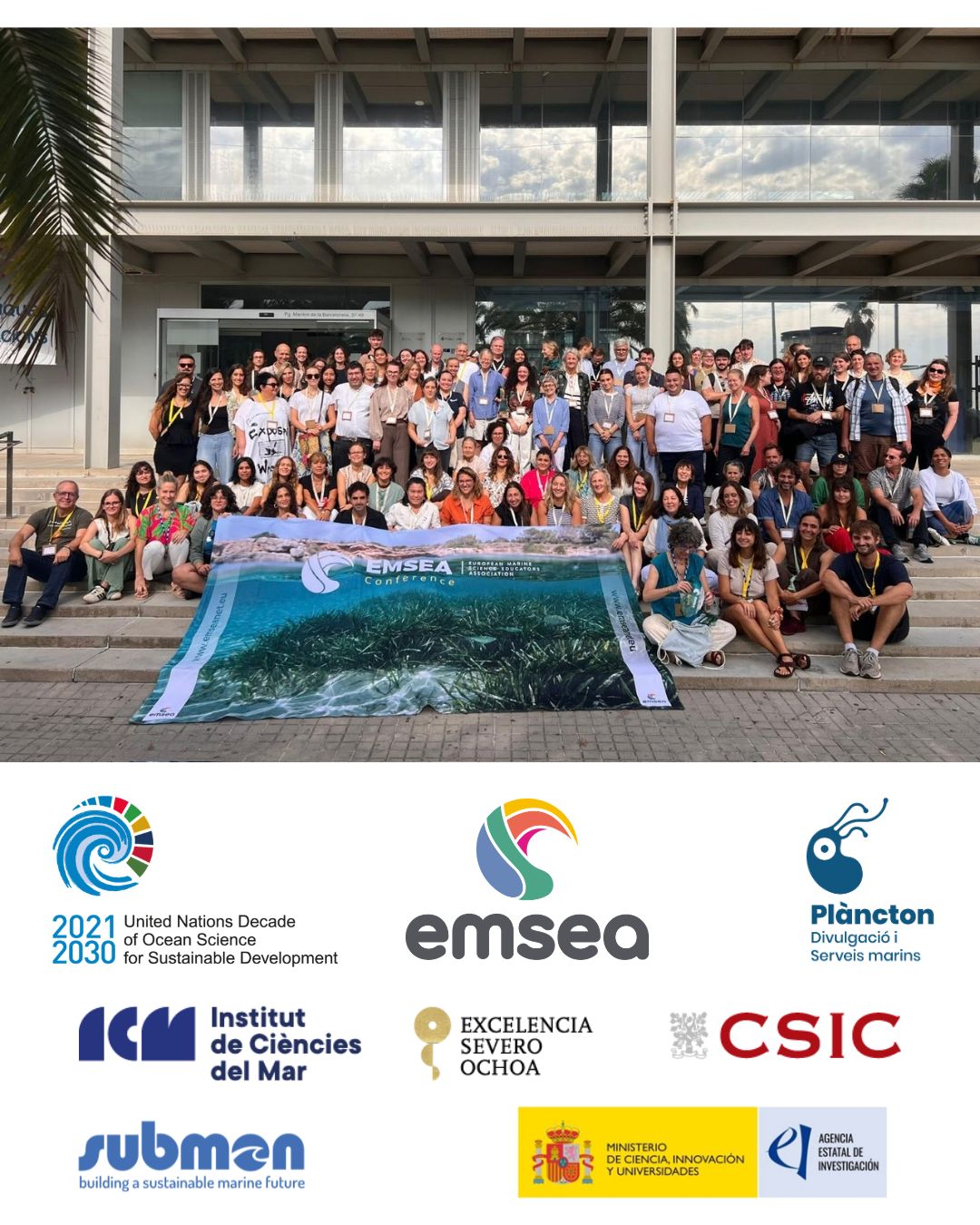
Last week we headed to Barcelona for EMSEA2026, the annual conference of the European Marine Science Educators Association. The conference was co-organised by the Institut de Ciències del Mar (ICM-CSIC), Plàncton, Divulgació i Serveis Marins, and SUBMON, and endorsed by the UN Ocean Decade.
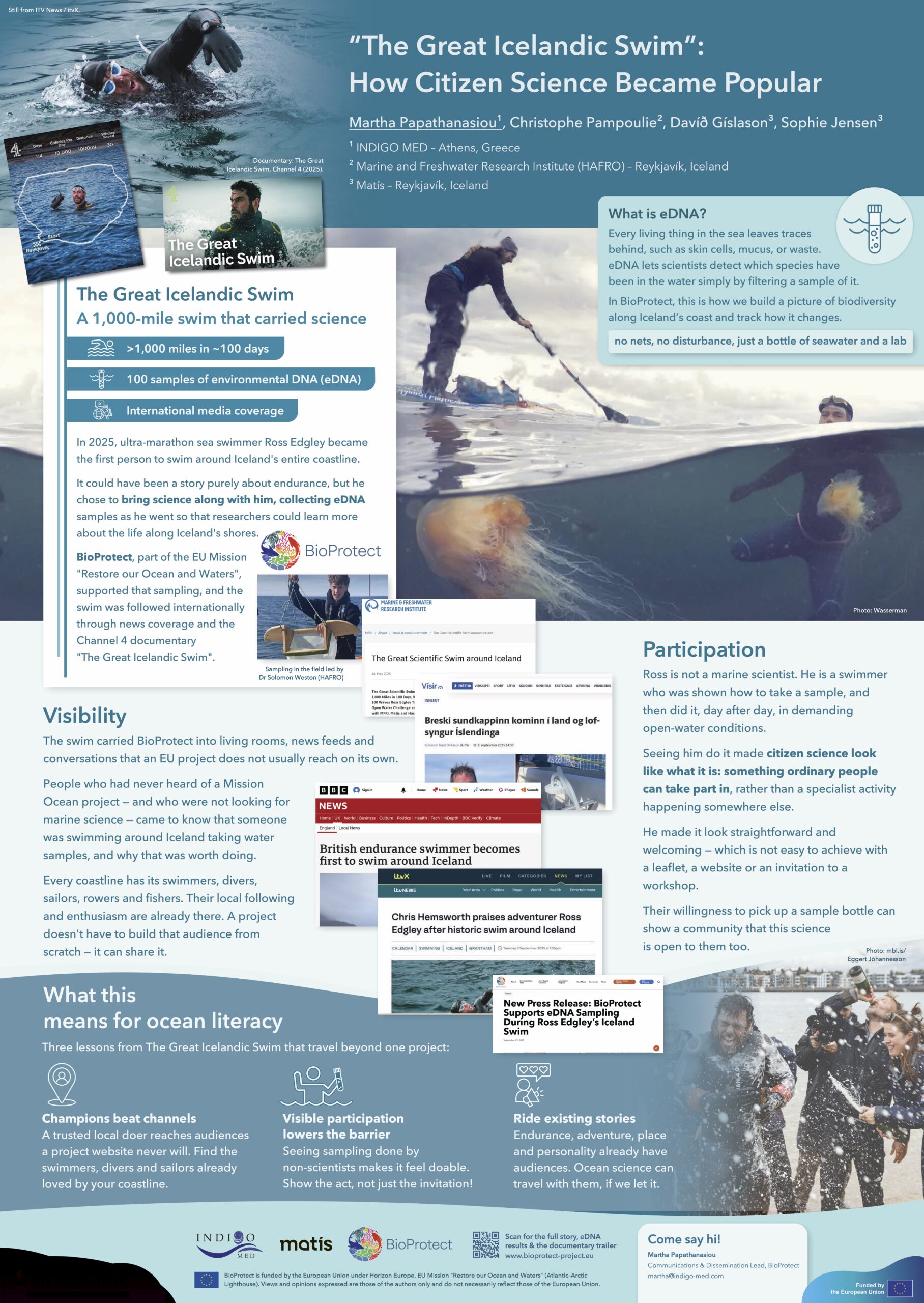
We brought a poster with a story we’ve been wanting to tell for a while: “The Great Icelandic Swim: How Citizen Science Became Popular”.
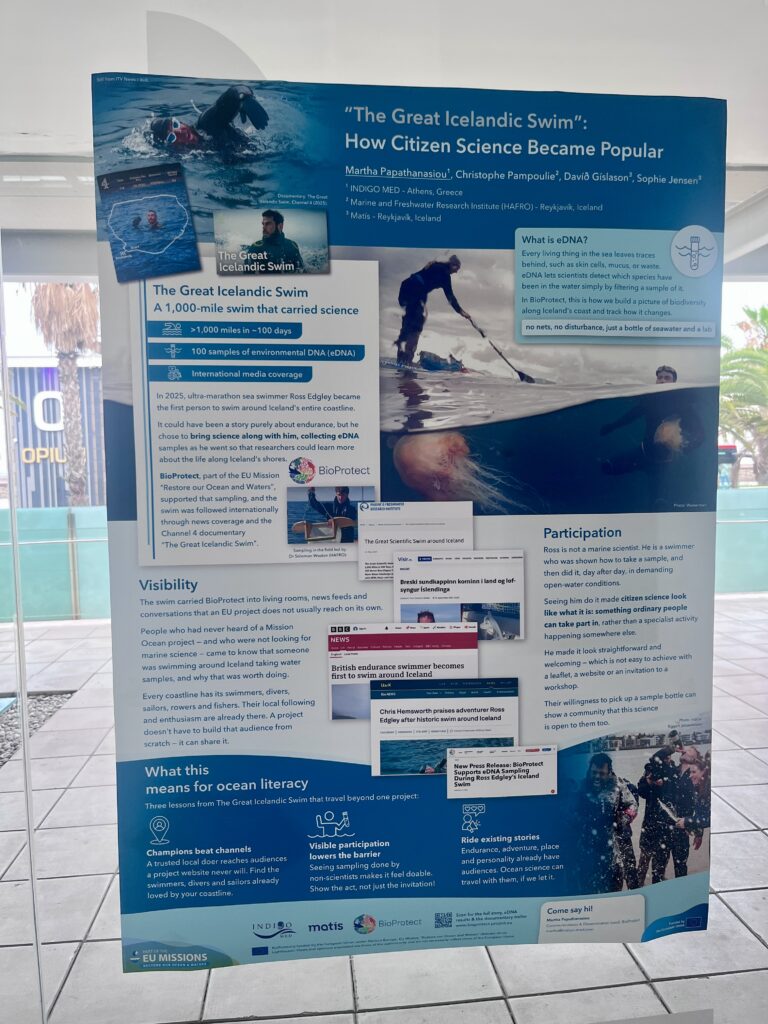
In 2025, ultra-marathon sea swimmer Ross Edgley became the first person to swim around Iceland’s entire coastline. He covered more than 1,000 miles in about 100 days. It could have been a story purely about endurance, but he chose to bring science along. On the way, he collected environmental DNA (eDNA) samples so that researchers could learn more about the life along Iceland’s shores. BioProtect supported the sampling, and the swim was followed internationally through news coverage and the Channel 4 documentary “The Great Icelandic Swim“.
What is eDNA?
Every living thing in the sea leaves traces behind in the water. eDNA lets scientists find out which species have been present just by filtering a sample of seawater: no nets, no disturbance, just a bottle and a lab. In BioProtect, this is how we build a picture of biodiversity along Iceland’s coast and track how it changes.
Lessons learnt
The poster looked at what the swim achieved beyond the data. It carried BioProtect into living rooms, news feeds and conversations that an EU project rarely reaches on its own. It also showed citizen science as something ordinary people can take part in. Ross is not a marine scientist. He is a swimmer who was shown how to take a sample, and then did it day after day in demanding open-water conditions.
What surprised us most was how far the story travelled. Through news coverage and the Channel 4 documentary, people who had never heard of an EU Mission Ocean project, found out that someone was swimming around Iceland taking water samples, and why. And because Ross isn’t a scientist, citizen science suddenly looked like something anyone could do.
We had some great conversations at the poster, and plenty more over coffee and during workshops. A big thank you to EMSEA and all the co-organisers for such a warm and well-run few days. And thanks to everyone who stopped by to chat.
The EMSEA fish has now been handed over to Lisbon, so we’ll see you there in 2027!
The poster was put together by Martha Papathanasiou (INDIGO MED), Christophe Pampoulie (HAFRO), and Davíð Gíslason and Sophie Jensen (Matís).
You can download the poster and find out more about the Channel 4 documentary.