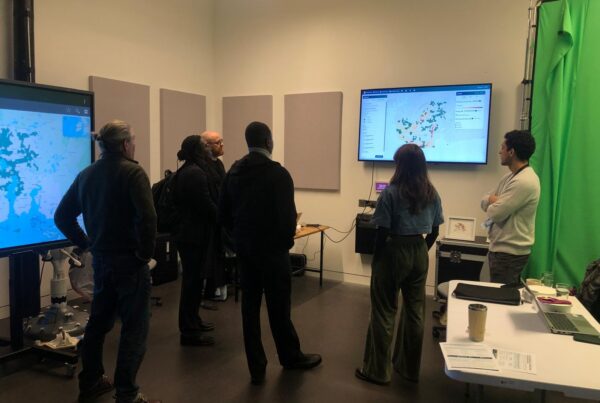


BioProtect was represented at the PISCeS conference, held at the University of Guelph in Ontario, Canada, bringing the project’s work on environmental DNA (eDNA) into conversation with an international community of researchers and practitioners.
PISCeS – Pathway to Increase Standards and Competency of eDNA Surveys focuses on strengthening the use of eDNA in biodiversity science. The event was organised by the Biodiversity Institute of Ontario, home of BOLDsystems, and brought together scientists working to improve how eDNA is used for biodiversity monitoring, conservation planning and environmental decision-making.
During the conference, Marjolijn Rika Nijzigh presented her BioProtect PhD work in a talk titled “Implementation of environmental DNA into marine conservation practices: From monitoring biodiversity to systematic conservation planning.” Her presentation explored how eDNA can support marine conservation by moving from species detection and biodiversity monitoring towards more systematic, evidence-based planning.

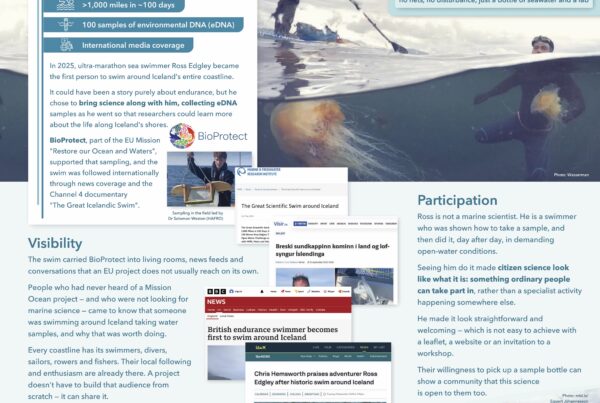
Davíð Gíslason from Matís also presented a poster titled “Implementation of environmental DNA (eDNA) for biodiversity mapping, monitoring and invasive species detection.” The poster highlighted the potential of eDNA as a powerful tool for understanding marine ecosystems, supporting biodiversity mapping and improving the early detection of invasive species.

For BioProtect, participation in PISCeS was a valuable opportunity to share project research, exchange knowledge with leading eDNA experts, and connect with scientists working on similar challenges around the world. As BioProtect continues to develop tools and approaches for marine biodiversity protection, eDNA remains an important part of the project’s efforts to improve how we monitor, understand and manage marine life.
By engaging with the wider eDNA community, the project is helping to ensure that emerging scientific methods can contribute to practical, robust and scalable solutions for marine conservation.