
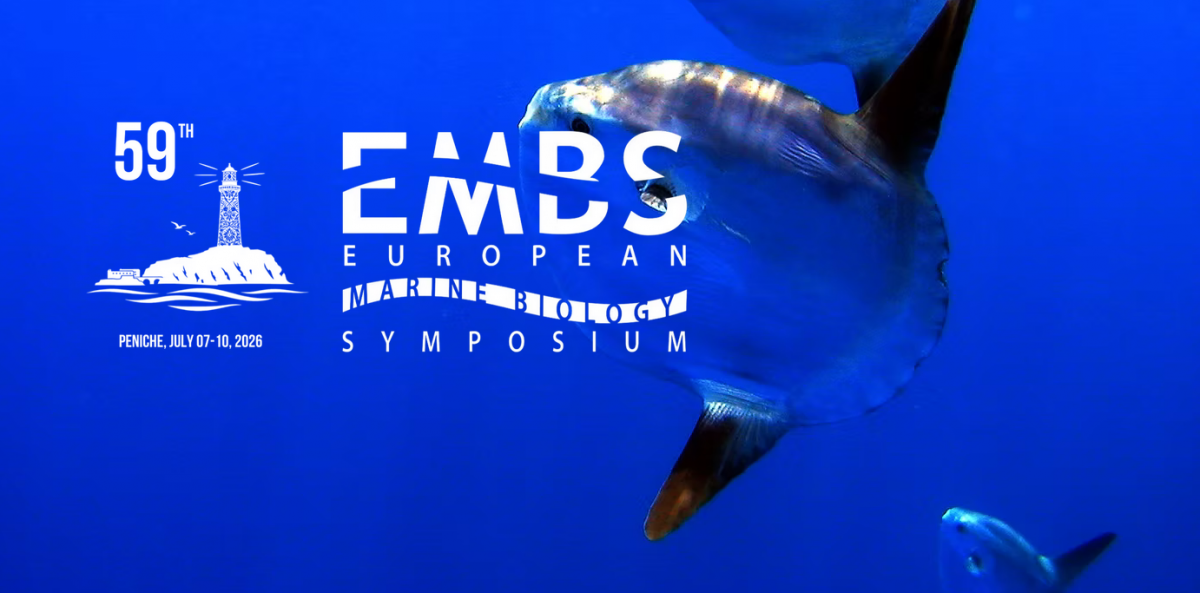
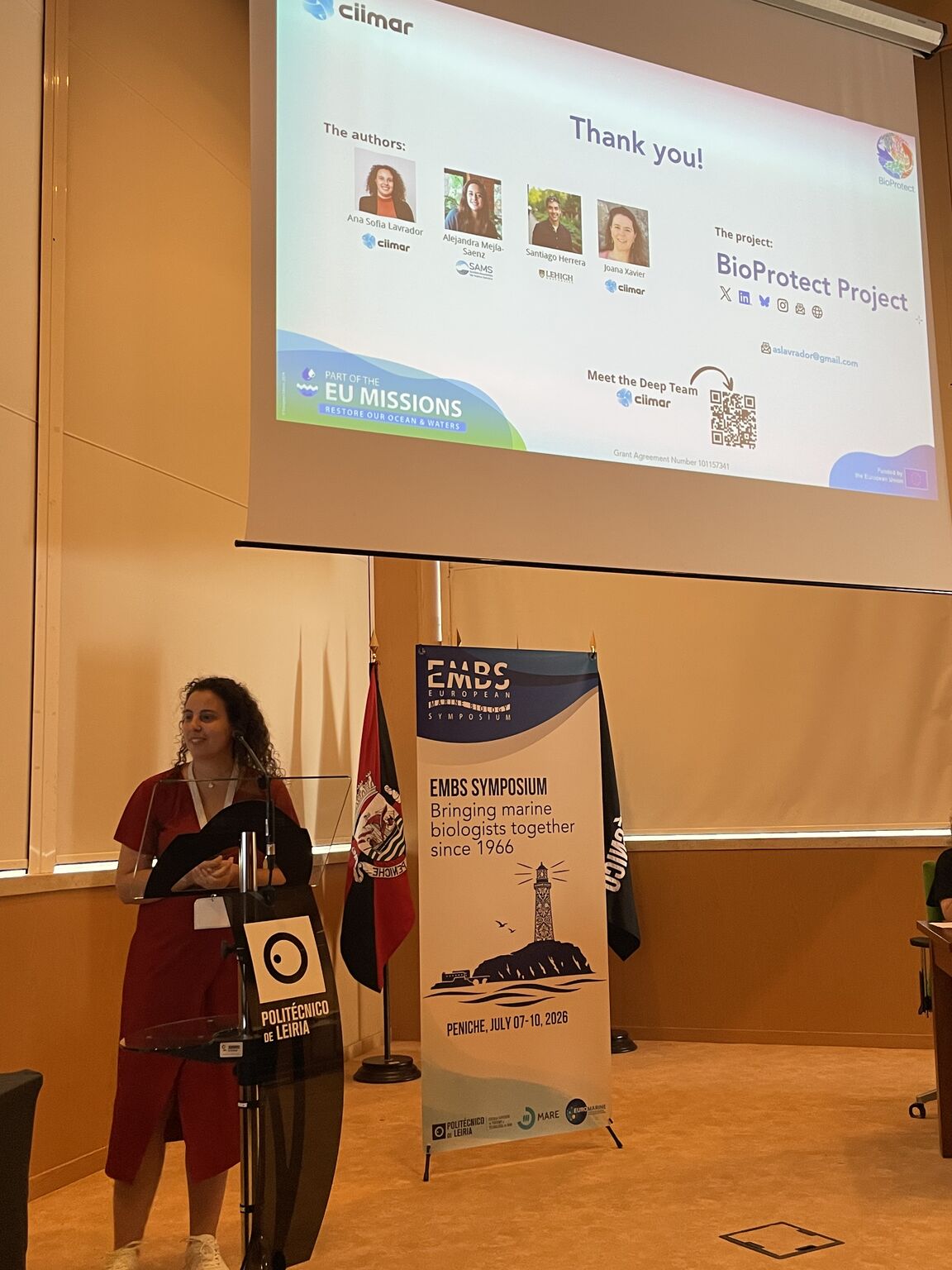
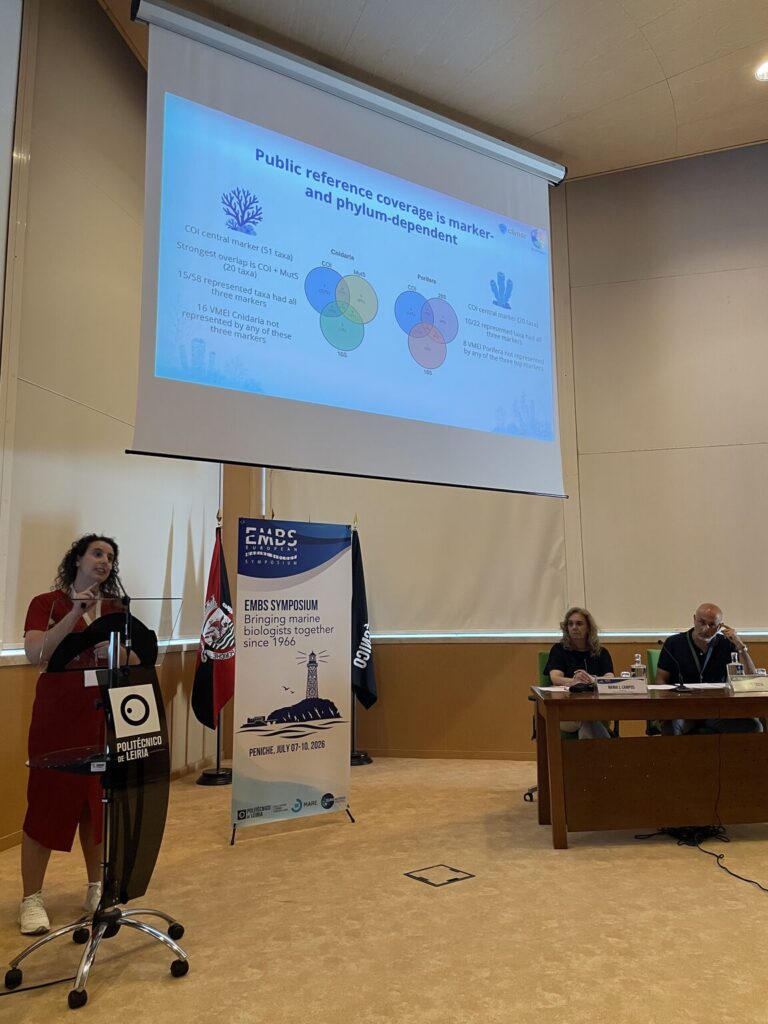
BioProtect recently took part in the 59th European Marine Biology Symposium (EMBS) in Peniche, Portugal, where our team attended the conference and presented new research on the readiness of molecular reference databases for deep‑sea environmental DNA (eDNA) monitoring.
Ana Sofia Lavrador, from CIIMAR’s Deep-Sea Biodiversity and Conservation Research Team, joined the international marine science community at EMBS59 to share project results and connect with researchers working on ocean biodiversity and conservation. During the symposium, we presented our study on “Molecular reference data gaps for deep‑sea VME indicator taxa in the Northeast Atlantic and its implications for DNA‑based biodiversity assessments,” showcasing BioProtect’s contribution to advancing DNA‑based tools for marine monitoring.
Research presented
The study, currently being prepared as a manuscript, investigates whether public molecular reference databases are ready to support DNA‑based monitoring of Vulnerable Marine Ecosystem (VME) indicator taxa, with a focus on deep‑sea corals and sponges in the Northeast Atlantic. It shows that while molecular data exist for many VME indicators, important gaps remain that can affect how reliably eDNA is used to assess biodiversity.
Three key messages were shared with the EMBS audience:
- eDNA readiness must be built, not assumed.
- Public molecular data exist for many VME indicator taxa, but critical gaps persist.
- For eDNA monitoring, it is not enough to have sequences: the right marker and amplicon region, reliable taxonomy, voucher traceability, and curated metadata are all essential.
These points underline the need to strengthen reference databases so that DNA‑based biodiversity assessments can better support deep‑sea monitoring and conservation.
Why this matters for BioProtect
This work directly supports BioProtect’s mission to improve science‑based tools for ocean protection and sustainable management. By identifying where reference databases need to be reinforced, the study helps lay the groundwork for more robust, trustworthy DNA‑based assessments that can inform decisions on vulnerable deep‑sea habitats and ecosystem protection.