
BioProtect joined the ICES Annual Science Conference 2026 (ASC 2026), held by the International Council for the Exploration of the Sea in Brest, France. Every year the conference brings together researchers, policymakers, practitioners and marine professionals from Europe and beyond. It gave us a great chance to show how BioProtect is developing area-based management tools that help protect and restore marine ecosystems and biodiversity.
A shared stand and many conversations
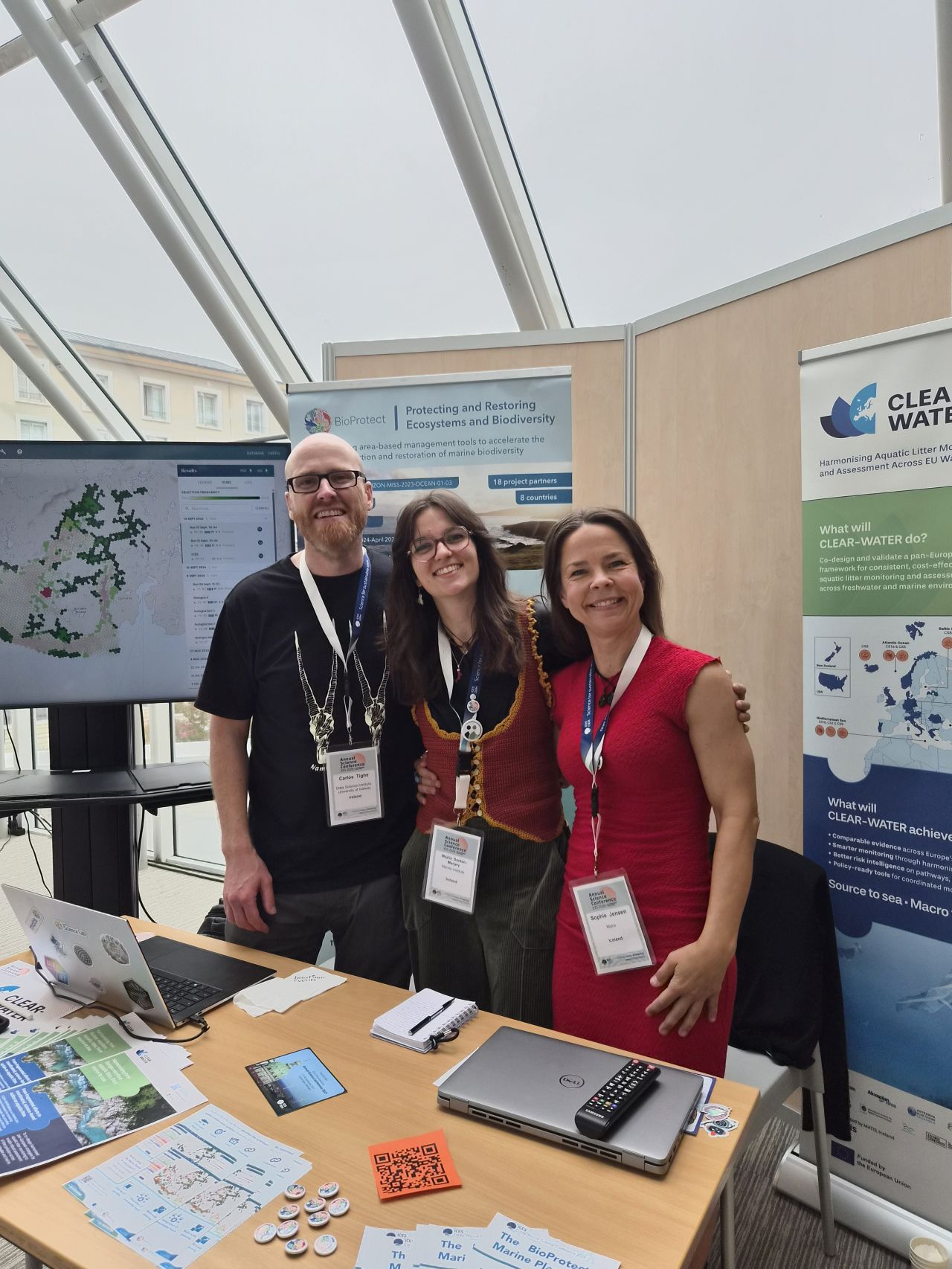
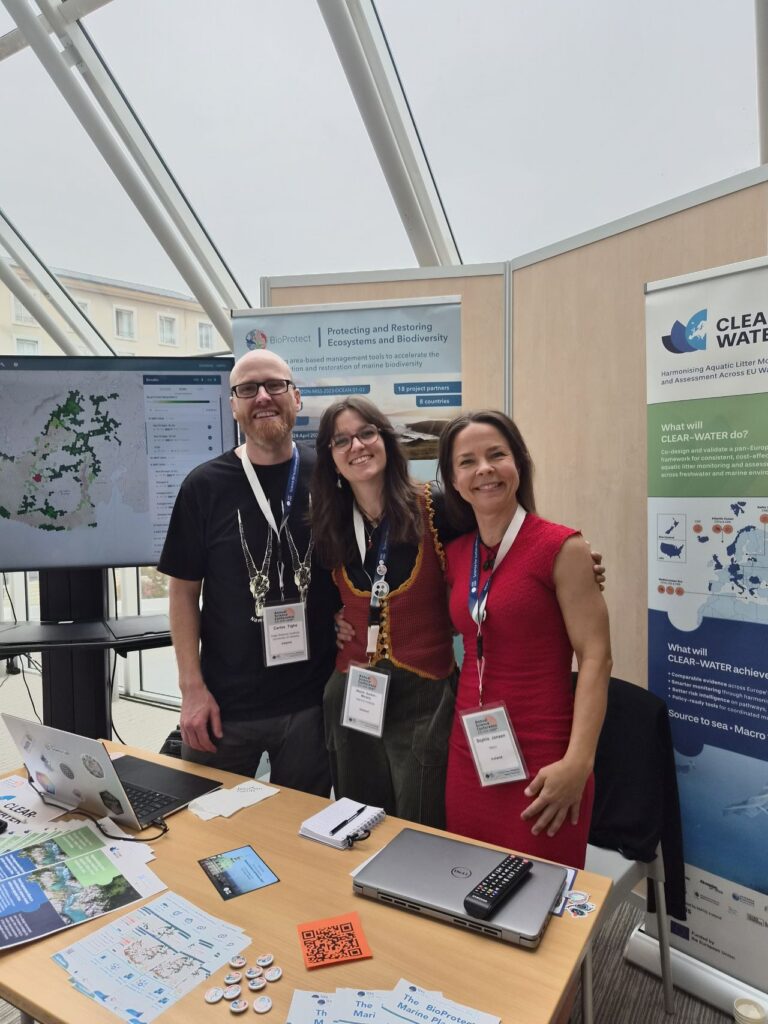
We ran a stand for the whole conference, which we shared with the new project CLEAR-WATER It quickly became a place for people to meet. Coordinator Sophie Jensen, Carlos Tighe and Maylis Sontot-Marjary welcomed visitors all week and gave live demos of the BioProtect Marine Planner. The Marine Planner is an online web application for marine spatial planning and stakeholder engagement.
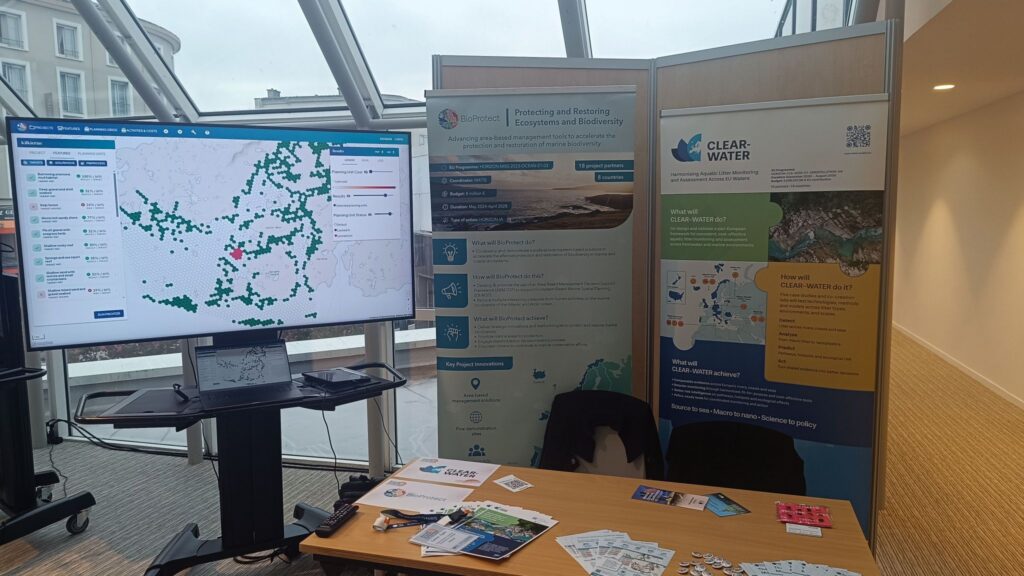
Visitors asked us about:
- the methods behind the tool
- how it can be used in academic research
- how it can support real decisions by managers and policymakers
From projects to impact
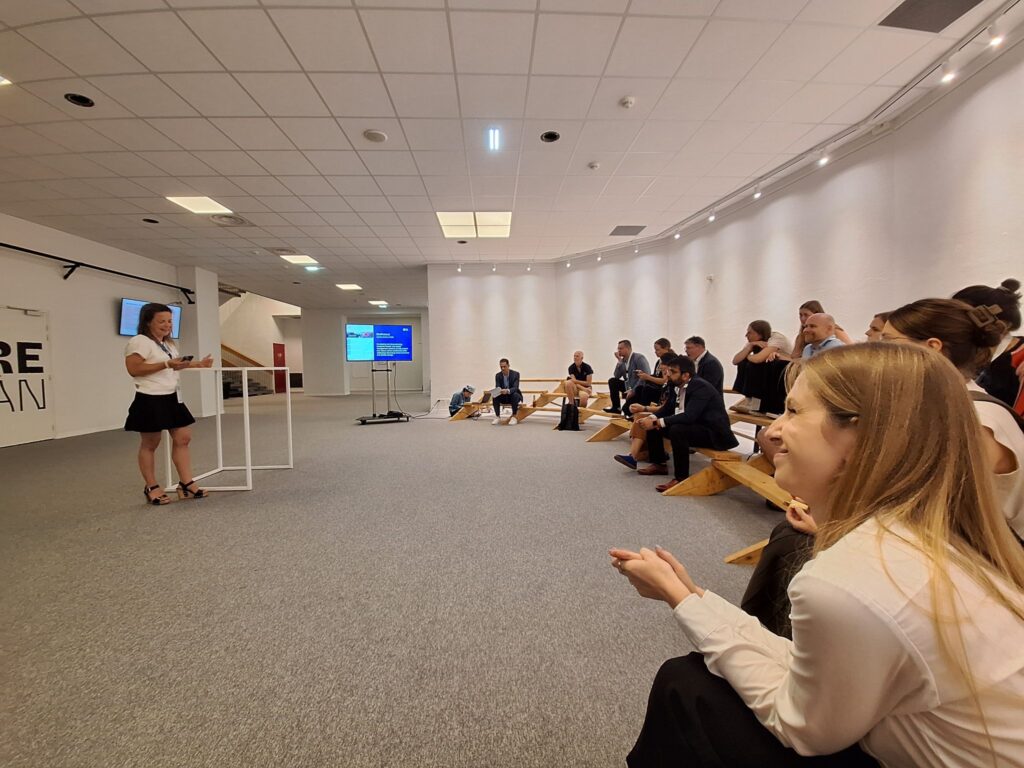
Sophie Jensen presented BioProtect to other project coordinators in the “From Projects to Impact” session. She explained how the project turns research results into practical tools that people can use. The session also helped us connect with other initiatives that face the same challenge of making science count beyond a project’s lifetime.
Giving communities a voice through participatory mapping
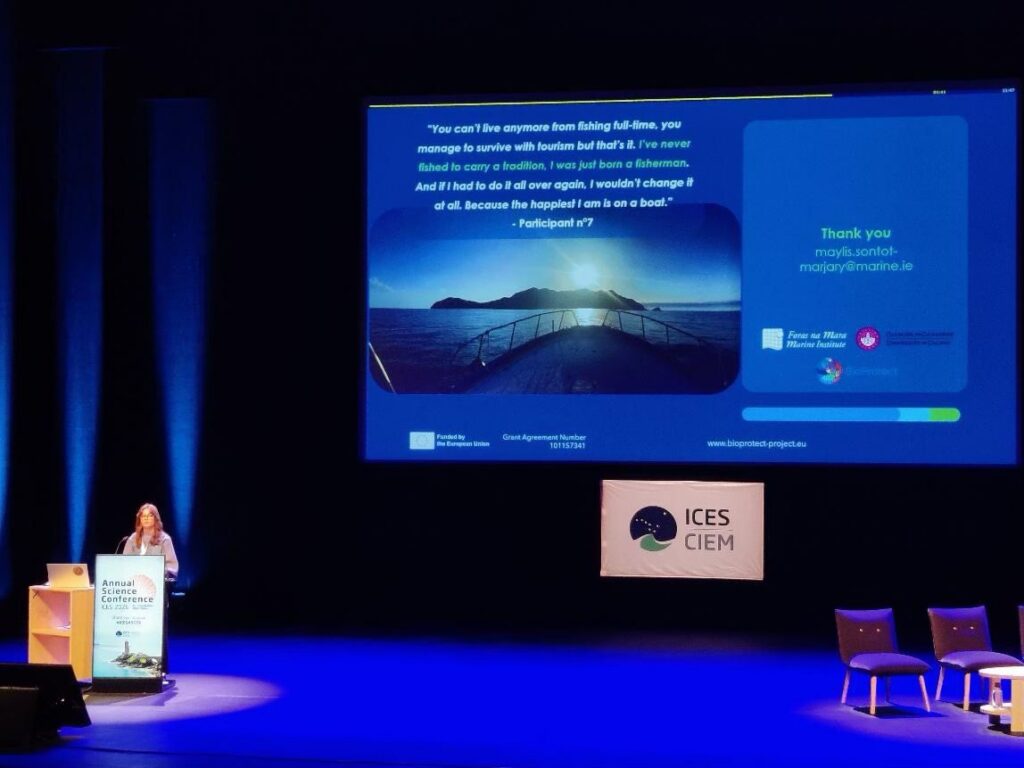
Maylis presented BioProtect’s participatory mapping work in Ireland (known as PPGIS, or Public Participation GIS). She spoke in the session on data quality in small-scale fisheries. Her talk showed how local knowledge from fishers and coastal communities can be collected in a structured way and used in marine planning, so that the people closest to the sea help shape decisions about it.
What we learned
The week gave us plenty to think about:
- A unique tool: Many decision support tools were on show, but none quite like the Marine Planner. Several could even provide data to it, which opens the door to working together.
- Strong interest in BioProtect Engage: Many people were keen on our stakeholder engagement and data collection work. They especially wanted to know how stakeholder feedback can be built into possible solutions, and how to show clearly that it has been.
- Interoperability: We discussed planning units and how to standardise them so that different projects and their outputs can work together.
- Working across scales: Participants were interested in solutions that work at local, regional and wider scales.
- Looking ahead: We explored possible funding sources and new projects that could use the Marine Planner after BioProtect ends.
ICES ASC 2026 reminded us that healthy, resilient seas depend on the connections we make as much as the tools we build. We are grateful to everyone who visited our stand, joined our presentations, shared ideas over coffee or challenged us with thoughtful questions.
Many thanks also to the ICES organisers and session conveners for a well-organised and inspiring conference!