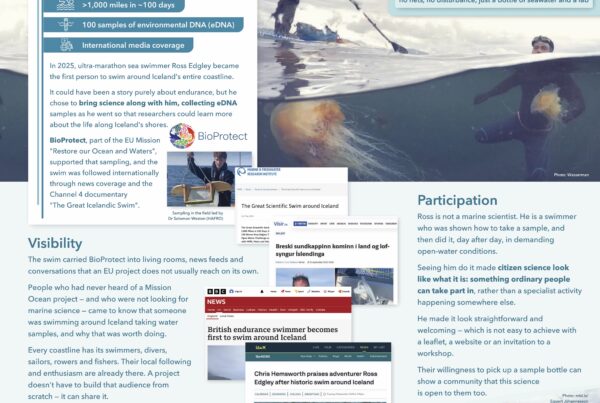


This summer, environmental DNA (eDNA) research in Iceland advanced with new sampling activities in Skjálfandi Bay, North Iceland. In mid-August, Davíð Gíslason, eDNA specialist at Matís, together with Rasmus Lind, an intern in the genetics department, conducted extensive sampling as part of the Icelandic Demonstration Site initiative. A total of 10 sampling sites were selected within the Bay.

In collaboration with the University of Iceland’s Research Centre in Húsavík, water samples were collected at 20 m, 100 m, and at the seafloor using Niskin bottles. This approach ensures that biodiversity is captured across the entire water column. The samples were then filtered through Sterivex filters, frozen, and transported to Matís, where eDNA extraction and metabarcoding analysis will take place in the coming months.

The analysis will screen for eDNA traces of fish, elasmobranchs, whales, invertebrates, and cold-water corals. The aim is to provide a clearer picture of the Bay’s biodiversity, which is particularly significant given its role as a popular whale-watching destination and key marine habitat.
During their time in Skjálfandi Bay, the team was fortunate to observe a humpback whale, underlining the ecological richness of the area.
The findings from this project will contribute valuable data to support marine and coastal conservation efforts in Iceland, providing a stronger scientific foundation for the protection and sustainable management of marine ecosystems.